The direct answer
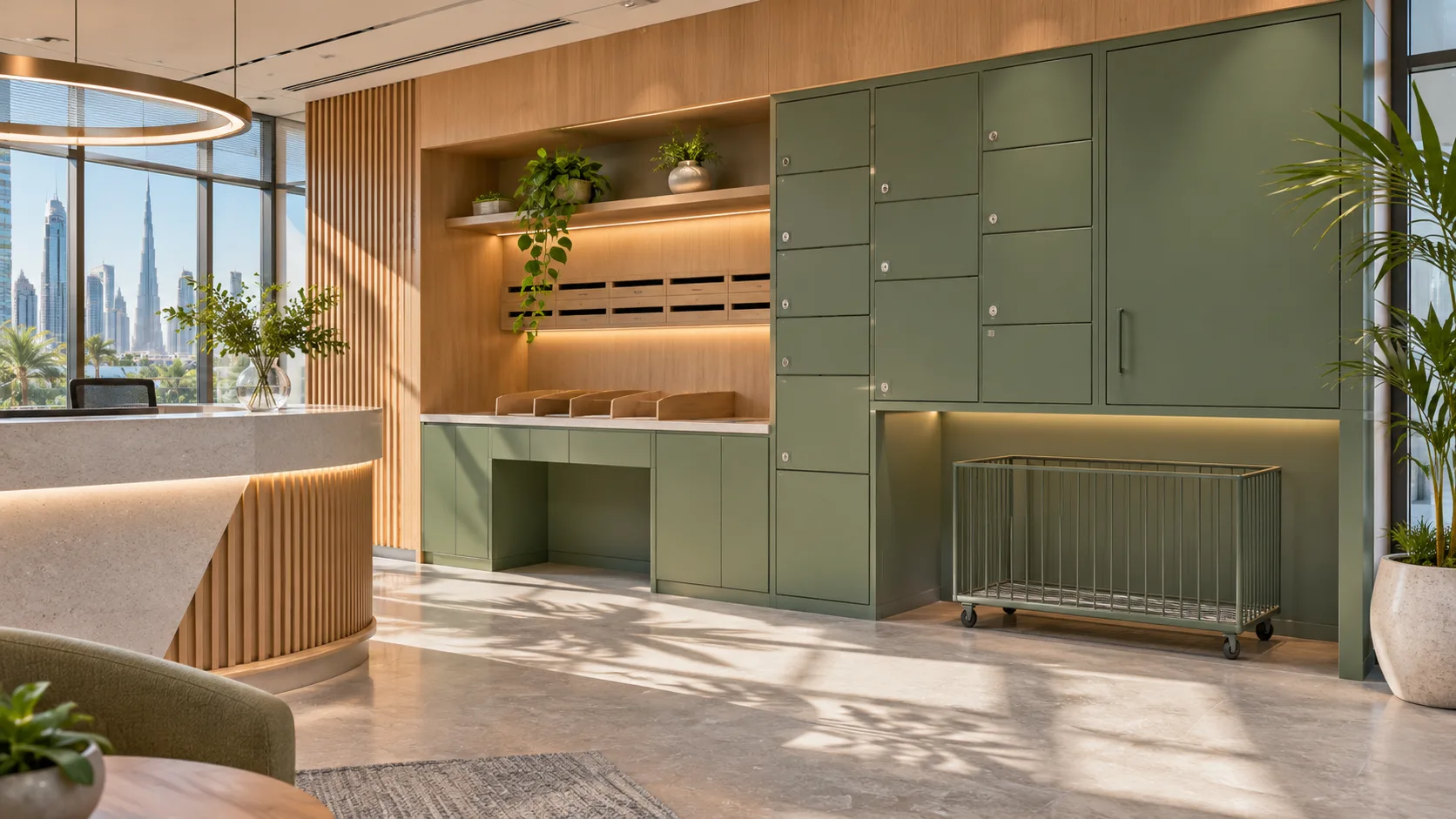
Brief hybrid-office lockers from employee journeys and actual belongings, not from a one-locker-per-desk formula. Establish who attends on the busiest overlapping day, what they carry, how long items stay and who manages access. Then choose an assigned, shared day-use or mixed model. Locate storage where it supports arrival and movement without creating a queue at reception or a noisy opening-and-closing zone beside focused work. The specification should connect capacity, compartment sizes, locks, accessibility, ventilation, charging, administration and cleaning. Lockers are a workplace system, not just a row of doors.
- Use peak attendance rather than total headcount alone
- Inventory belongings and storage duration
- Choose an operating model before a product
- Test location on the daily journey
Start with demand, not a standard ratio
Separate the total workforce from likely simultaneous attendance. Review team patterns, visitors, contractors and roles that require equipment or uniforms. A locker used for one workday is different from an assigned compartment holding personal items all week. Ask whether people bring helmets, laptop bags, gym kits, coats or specialist equipment, and whether any items require separate handling. Build a simple demand profile for typical, busy and exceptional days. This makes the trade-off visible: fewer shared lockers may save space, but only if booking, clearing and support processes are credible.
- Typical and peak attendance
- Assigned versus temporary users
- Item categories and sizes
- Same-day or long-term storage
- Visitor and contractor needs
Compare three operating models
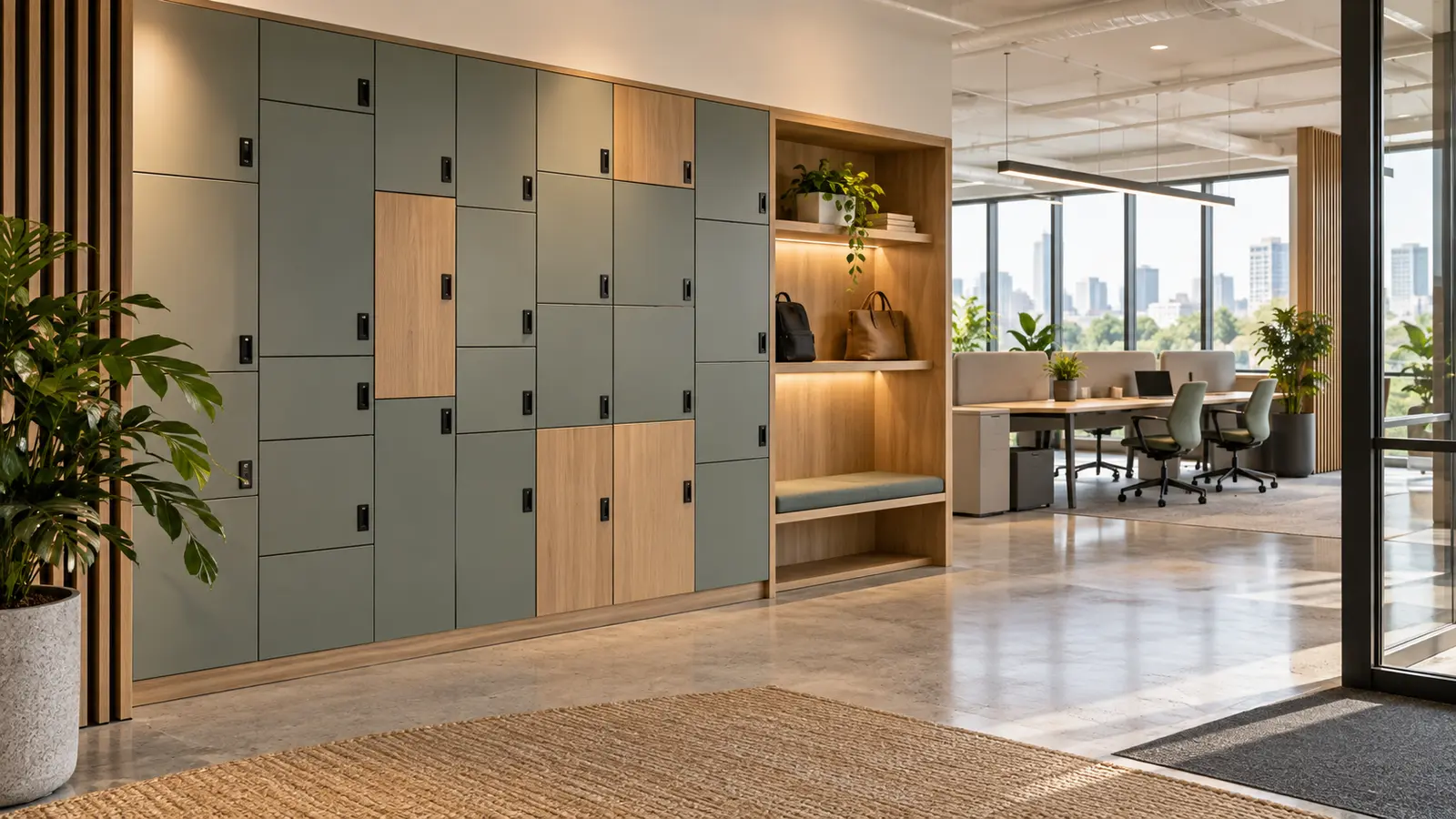
Assigned lockers give continuity and simple ownership but can sit unused on remote-work days. Day-use lockers improve utilisation, yet need clear release rules and support when a user forgets to empty or unlock one. Bookable lockers can align with desk reservations, though they add technology and administration. Many offices benefit from a mixed model: assigned compartments for roles with persistent equipment, day-use storage for hybrid staff and a small number of larger shared compartments. Steelcase describes modern lockers as supporting secure belongings and hybrid work while also contributing to space division and informal gathering; those extra roles should be intentional, not allowed to compromise the core storage task.
- Assigned: predictable but space-intensive
- Day-use: efficient with strong operating rules
- Bookable: coordinated but technology-dependent
- Mixed: flexible when user groups are clearly defined
Locate lockers on a useful route
A good location lets people store belongings soon after arrival and retrieve them without crossing a quiet work zone repeatedly. Test the entrance sequence, access-control line, lifts, reception, touchdown desks and team neighbourhoods. Open doors and waiting users must remain clear of required circulation. A bench can support bag handling, but it should not become an obstacle. Distributed lockers may reduce walking in a large workplace, while a central bank can simplify administration. Consider sightlines and personal privacy: users should not need to display bag contents directly to visitors or colleagues in a meeting area.
- Arrival and departure path
- Door-swing and user-standing zones
- Queue and peak changeover
- Privacy from public areas
- Proximity to teams and support
Planning example
An office has 120 employees, 72 workpoints and a measured peak of 78 people on the busiest common day. Interviews show that 12 operations staff need assigned storage for equipment, while most hybrid staff carry a laptop bag and small personal items. The test brief provides 12 assigned full-height compartments, 64 day-use medium compartments and eight larger compartments for helmets or bulky bags. The total is not derived from total headcount: it combines role needs, observed overlap and a modest peak buffer. Two banks sit beyond access control on routes to the main neighbourhoods, each with a short bench offset from the circulation line. Facilities owns override access and end-of-day clearance; users receive a simple rule at induction. Before procurement, the team pilots sample compartments with real bags and reviews accessible positions.
- Numbers illustrate a method, not a universal ratio
- Use verified attendance and item data
- Confirm final accessibility and safety requirements for the project
Specify the compartment and its management
The compartment mix should reflect belongings, not visual repetition. Steelcase product information shows office lockers in different compartment heights and depths, reinforcing the need to compare product dimensions with actual items. Define internal hooks or shelves, ventilation where appropriate, door durability, numbering and cleanability. Decide whether charging is permitted; if it is, electrical design, device heat, cable management and policy require specialist coordination. Lock selection should follow the organisation's security and data policies. Mechanical keys, codes, cards and networked locks create different support, audit and failure procedures.
- Usable internal dimensions
- Shelf, hook and bag arrangement
- Accessible reach positions
- Lock administration and override
- Cleaning and ventilation
- Power policy and specialist review
A briefing checklist before procurement
Review storage with workplace, facilities, IT, security, accessibility and design stakeholders before a product is ordered. A sample bay or full-size mock-up can reveal awkward doors, small compartments and unclear instructions.
- Peak demand and user groups agreed
- Assigned, day-use and bookable rules defined
- Real belongings tested in each compartment type
- Locations checked against routes and doors
- Accessible compartments included
- Lock ownership, override and failure procedure assigned
- Charging policy coordinated
- Numbering and user instructions planned
- Cleaning, abandoned-item and end-of-day processes documented
Limitations and the useful next step
Attendance data can change as policies and team structures evolve, so allow the storage model to be adjusted without rebuilding the whole workplace. This article does not set accessibility, fire-safety, electrical or security requirements; qualified parties must confirm those for the premises and selected system. Before issuing a locker package, run a two-week evidence exercise: sample attendance on the busiest days, photograph representative bags without personal data, interview facilities about support and test physical samples with users. Convert those findings into a one-page locker schedule covering quantity, size, location, lock type and operating rule. That brief gives procurement something more reliable than a generic headcount ratio.
- Validate the busiest day
- Pilot the physical product
- Assign operational ownership
- Keep a route for future reconfiguration
Sources & further reading
Make this useful for your project.
A review of your property and priorities can turn general guidance into a defined brief.
Explore Workplace planningDiscuss your project